

-
Contact number:
+86 752 3339581 / 3339952 +86 755 84660522 / 84682177


time:2026-08-14 Editorial:Mike Views:0
The global solar LED lighting industry is entering a new phase of development. As market demand for renewable energy solutions continues to grow, competition among solar LED manufacturers, solar street light suppliers, and outdoor lighting solution providers is becoming more intense. In the future, companies will no longer compete only through low prices but will need to focus on technology innovation, product reliability, intelligent solutions, and complete project capabilities.
In the early stage of the solar lighting market, many manufacturers focused mainly on cost reduction and price advantages. However, with increasing customer requirements for performance and reliability, the industry is gradually shifting from simple product sales to integrated solar lighting solutions.

Future competition will focus on providing complete systems rather than individual products. Customers, especially international project developers and engineering companies, are looking for suppliers who can provide professional solutions including lighting design, solar panel selection, battery configuration, intelligent control systems, installation support, and after-sales service.
For example, traditional LED products are being replaced by high-efficiency LED lighting systems with higher lumen output, better energy utilization, and longer service life. At the same time, lithium battery technology is becoming the preferred choice instead of traditional lead-acid batteries due to its advantages in safety, lifespan, and charging efficiency.
Another important trend is the development of smart solar lighting systems. Through intelligent controllers, remote monitoring, motion sensors, and energy management technology, solar lights can achieve automatic adjustment, real-time monitoring, and improved energy efficiency. This helps reduce maintenance costs and provides better user experiences for municipalities, commercial projects, and industrial applications.
The solar LED lighting market is also moving from single-product sales toward large-scale engineering projects. Governments, construction companies, and infrastructure developers increasingly require customized solar street lighting solutions for roads, residential areas, industrial parks, rural communities, and public spaces.
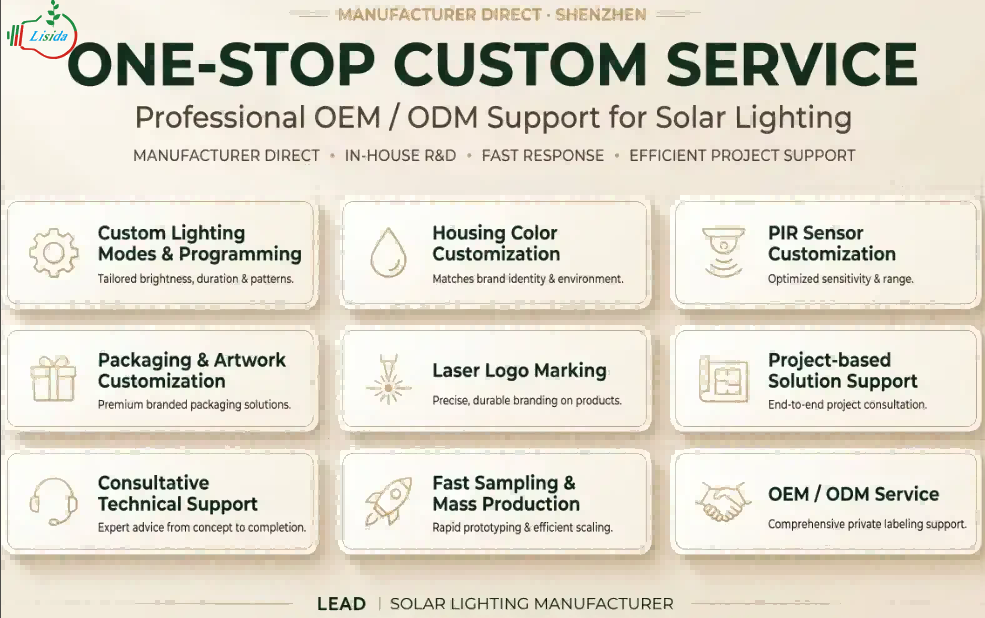
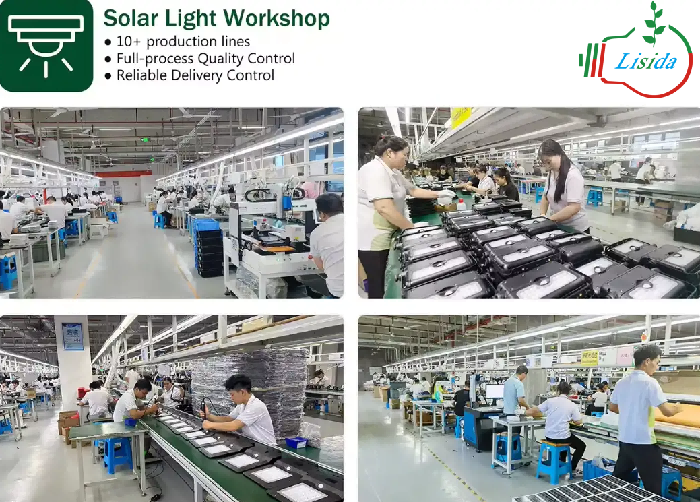
Manufacturers with strong R&D capabilities, production capacity, certification support, and project experience will have greater advantages in global markets. Providing OEM and ODM services, customized designs, and reliable technical support has become an important competitive factor for China solar light manufacturers.
Although the solar LED industry has strong growth potential, it also faces several challenges. One of the biggest issues is intense low-price competition, especially in the Chinese market.
A large number of small and medium-sized manufacturers compete mainly through lower prices, which has resulted in several problems:
· Serious product homogenization;
· False product specifications and exaggerated performance claims;
· Insufficient battery capacity;
· Short product lifespan and unstable quality.
These issues not only affect customer trust but also create challenges for professional manufacturers that focus on quality and innovation. In the future, industry standards and customer awareness are expected to increase, encouraging the market to move toward higher-quality and more reliable solar lighting products.
For companies involved in global exports, international trade policies are another important factor. Solar LED lighting exporters need to pay close attention to changes in tariffs, country-of-origin requirements, environmental regulations, and product certification standards.
Different markets have different requirements for solar lighting products. Certifications such as CE, RoHS, IEC, and other regional standards are becoming increasingly important for entering overseas markets. Manufacturers that can provide certified, compliant, and high-quality products will have stronger competitiveness in regions such as Europe, Africa, the Middle East, Southeast Asia, and South America.
The solar lighting industry is also affected by changes in raw material costs. Key components such as lithium batteries, photovoltaic solar panels, aluminum materials, and LED chips directly influence product pricing and manufacturing costs.
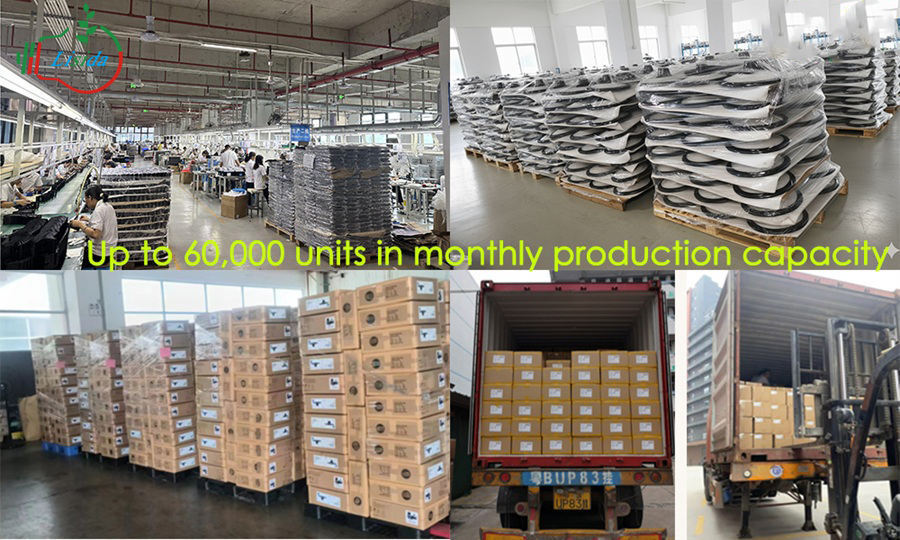
Fluctuations in lithium battery prices can impact energy storage solutions, while changes in solar panel and LED chip costs may affect overall product competitiveness. Therefore, manufacturers need strong supply chain management capabilities to maintain stable production and competitive pricing.
The future of the solar LED lighting industry will be shaped by technology, quality, and integrated solutions. Companies that continue to improve LED efficiency, adopt advanced lithium battery technology, develop intelligent control systems, and provide professional engineering services will have greater opportunities in global markets.
Although challenges such as low-price competition, trade risks, and raw material fluctuations remain, the long-term outlook for solar lighting is positive. With increasing demand for clean energy, smart infrastructure, and sustainable development, reliable solar street lights, solar flood lights, solar wall lights, and customized solar lighting solutions will continue to play an important role in the global transition toward green energy.

Whatsapp/Wechat: +86 15019255365

Whatsapp/Wechat: +86 15019255365
+86 752 3339581 / 3339952 +86 755 84660522 / 84682177
lead@lead-lighting.com


 EN
EN Home >